

Expert Stove & Oven Repair in Wilmington, MA
Appliance Repair for Homes & Businesses in Wilmington, Massachusetts and Nearby Areas
Stove and Oven Repair in Wilmington, Massachusetts | Appliance Repair Pros
Stove and Oven Repair in Wilmington, Massachusetts, is a service that restores the heart of your home. When your cooking appliances fail, meal planning becomes a headache, often leading to expensive takeout or microwave dinners. At Appliance Repair Pros, we help homeowners in Wilmington and the surrounding communities, including Tewksbury, Reading, Andover, and Burlington, get back to cooking nutritious meals for their families. We know that a broken range or wall oven is a major disruption to your daily life, especially during holidays or family gatherings.
Our team addresses a wide variety of symptoms that plague modern kitchens. You might be experiencing an oven that refuses to heat up, burners that click but never light, a glass cooktop that is cracked, uneven baking results, or a gas smell that causes immediate concern. In Wilmington, we see a mix of historic homes with older gas infrastructure and modern condos with high tech induction cooktops. We are equipped to handle the specific challenges presented by both scenarios. We approach every service call with a commitment to careful diagnostics and respectful work habits. We protect your kitchen floors and clean up our workspace before we leave. Our goal is to ensure your cooking equipment is safe and fully functional.
Contact us today.
Stove and Oven Repair Services in Wilmington
Cooking appliances come in many forms, utilizing different fuel sources and heating technologies. Whether you cook with gas or electricity, the systems involved require specialized knowledge to repair safely. We provide a comprehensive overview of the condition of your appliance. We do not just look at the broken part. We inspect the fuel delivery, the electrical circuits, and the ventilation to ensure the unit is operating efficiently.
Oven and Stove systems we work on:
- Freestanding gas and electric ranges
- Slide in ranges with front controls
- Built in single and double wall ovens
- Gas cooktops and rangetops
- Electric glass smooth top cooktops
- Induction cooktops
- Dual fuel ranges (gas cooktop with electric oven)
- Pro style residential ranges
What makes oven and stove repair tricky:
- Gas safety protocols require precise leak testing after every interaction
- High voltage circuits in electric stoves can be dangerous if not isolated
- Hidden spark modules and igniters are often buried deep inside the chassis
- Calibrating temperature sensors requires understanding airflow and heat retention
- Glass cooktops are fragile and require careful handling during disassembly
- Control boards are sensitive to heat exposure and voltage fluctuations
- Door lock mechanisms for self clean cycles can jam and lock the unit shut
Common Oven and Stove Problems We Fix
Homeowners in Wilmington frequently report specific issues that disrupt their cooking. We have detailed the most common problems below to help you identify what might be going on with your appliance.
Oven Not Heating Up
You turn the oven on to preheat, but after twenty minutes, the inside is still stone cold. This is the most common failure we see. It turns your oven into nothing more than a storage box. For gas ovens, this usually means the gas is not igniting. For electric ovens, it means the heating element is not receiving power or has broken internally.
Likely causes:
- Weak or broken gas igniter (glow bar)
- Burnt out bake or broil heating element
- Tripped thermal fuse or high limit switch
- Defective safety valve blocking gas flow
- Control board failing to send voltage to the heat source
- Loose or burnt wiring connection
How we diagnose it:
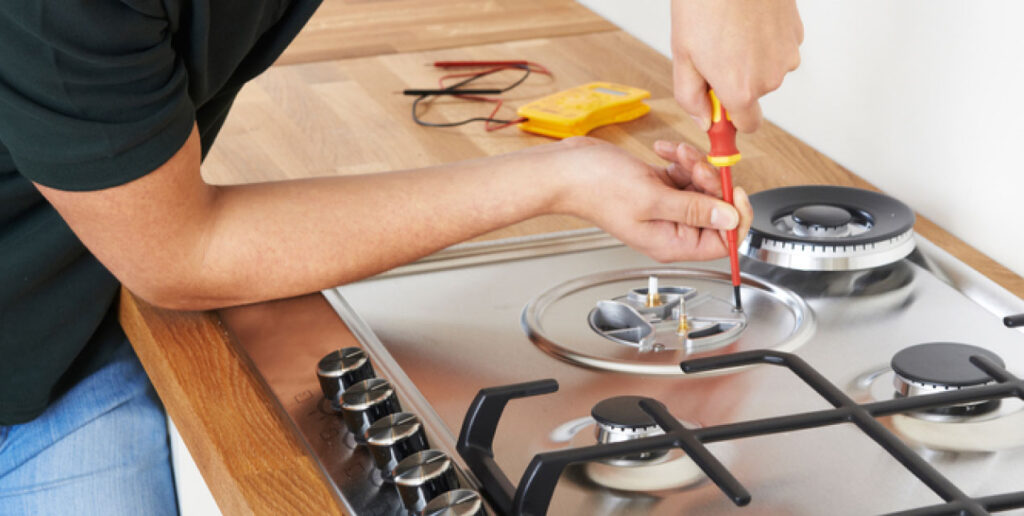
For gas units, we observe the igniter to see if it glows. If it glows but does not light the gas, it is likely too weak to open the safety valve. For electric units, we test the element for continuity using a multimeter. We also trace the voltage from the wall outlet to the control board and then to the element to find the break in the circuit.
What you can do right now:
Check your circuit breaker. Electric ovens run on 240 volts and can trip one side of the double breaker while leaving the clock and lights working. If you have a gas oven, verify that other gas appliances in the house are working to ensure the supply is on.
Gas Burner Will Not Light
You turn the knob and hear a clicking sound, but the flame never appears. Or worse, you hear nothing at all. This forces you to use a lighter or matches, which can be dangerous. This issue can affect a single burner or the entire cooktop. It is often caused by a disruption in the spark ignition system or a blockage in the gas flow.
Likely causes:
- Food debris or grease clogging the burner ports
- Cracked or dirty spark electrode
- Failed spark module
- Defective burner switch inside the knob
- Moisture in the burner assembly after cleaning
How we diagnose it:
We listen for the crisp snap of the spark. If there is no sound, we test the switch and the module. If there is a spark but no flame, we inspect the gas tube and burner cap for obstructions. We also check the alignment of the burner cap, as a misalignment can prevent ignition.
What you can do right now:
Remove the burner cap and base. Clean them thoroughly with warm soapy water and a stiff brush. Use a needle to clear the tiny holes (ports) where the gas comes out. Ensure everything is completely dry before reassembling, as water interferes with the spark.
Oven Temperature Is Inaccurate
You follow the recipe exactly, but your cookies come out burnt on the bottom and raw on top, or your roast takes an hour longer than expected. An oven that cannot hold a steady temperature makes baking impossible. This is often a drift in calibration or a failure of the sensing components.
Likely causes:
- Failed temperature sensor or thermistor
- Thermostat needing calibration
- Weak gas igniter taking too long to cycle on
- Convection fan failure causing hot spots
- Door gasket seal leaking heat
- Blocked vents disrupting airflow
How we diagnose it:
We place a professional digital thermocouple inside the oven to record the actual temperature swings over several cycles. We compare this to the set temperature. We inspect the resistance of the built in sensor and check the condition of the door seal to ensure heat is not escaping.
What you can do right now:
Check the door seal for rips or gaps. Avoid opening the oven door frequently while cooking, as this causes massive temperature drops. Ensure you are not covering the bottom of the oven with aluminum foil, which blocks airflow and reflects heat incorrectly.
Electric Element Not Working
On an electric cooktop, you might find that one burner stays cold while the others work fine. On a glass top stove, the ribbon element under the glass may not glow red. This limits your cooking space and can make preparing large meals difficult. It is usually a localized electrical failure.
Likely causes:
- Burnt out heating element ribbon
- Bad receptacle block or terminal
- Faulty infinite switch (the control knob)
- Broken internal wire
- Control board relay failure
How we diagnose it:
We perform a continuity test on the non working element. If the element is good, we test the switch to see if it is regulating power correctly. For coil top stoves, we inspect the point where the element plugs in, as these terminals often corrode and burn out over time.
What you can do right now:
For coil stoves, try swapping the non working element with a working one of the same size. If the “bad” element works in the new spot, the issue is the receptacle or switch, not the element itself.
Self Cleaning Cycle Failed
After running a self clean cycle, the oven door remains locked and will not open, or the oven went completely dead. The high temperatures involved in self cleaning (often over 900 degrees) can stress older components, leading to failure. A locked door with dinner trapped inside is a major panic point for homeowners.
Likely causes:
- Tripped thermal safety fuse due to excessive heat
- Failed door lock motor assembly
- Control board overheated and fried
- Warped door latch
How we diagnose it:
We access the door lock mechanism, often from the back or top of the unit, to manually release the latch. Once open, we test the thermal fuses which are designed to cut power if the oven gets too hot. We also inspect the cooling fan which should run during the clean cycle to protect the electronics.
What you can do right now:
Allow the oven to cool down completely for at least two hours. The lock is heat activated and may release once the internal temperature drops. Do not try to force the door open, as you will break the latch or the glass.
Glass Cooktop Is Cracked
A heavy pot dropped on a ceramic glass cooktop can cause a spiderweb crack. This is not just a cosmetic issue; it is a significant safety hazard. Moisture can seep through the crack and reach the high voltage electrical components below, creating a shock risk.
Likely causes:
- Impact from a heavy object
- Thermal shock from placing a cold pot on a hot burner
- Using the wrong type of cookware (rough bottom cast iron)
- Overtightening installation screws
How we diagnose it:
Visual inspection is usually sufficient. We assess if the crack extends over an active burner area or the control panel.
What you can do right now:
Stop using the cooktop immediately. Do not cook on a cracked surface. Cover the crack with tape to prevent moisture entry until professional service can arrive, but do not turn the burners on.
Oven Interior Light Is Out
While this seems minor, not being able to see your food without opening the door impacts your baking results. If changing the bulb does not fix it, the issue lies deeper in the electrical system.
Likely causes:
- Bad light socket assembly
- Failed door switch (plunger)
- Wiring issue
- Control board relay
How we diagnose it:
We test the socket for voltage when the door is open. We also check the continuity of the door switch, which controls the light.
What you can do right now:
Verify you are using the correct appliance rated bulb, which is designed to withstand high heat. Standard LED bulbs will melt or fail quickly inside an oven.
Gas Smell When Using Stove
Smelling gas is alarming and requires immediate attention. It can happen when a burner valve is leaking or when an igniter is taking too long to light the gas, allowing unburned fuel to escape into the room.
Likely causes:
- Weak igniter (delayed ignition)
- Leaking gas pressure regulator
- Loose gas line connection
- Defective safety valve
How we diagnose it:
We use an electronic combustible gas detector to sniff out the source of the leak. We check all connections from the wall to the internal valves. We also time the ignition process to ensure it happens within the safe window.
What you can do right now:
If the smell is strong or constant, turn off the gas supply and leave the house. Call us for assistance. Do not use any electrical switches or open flames.
Safety Notes for Stove and Oven Issues
Stoves and ovens combine extreme heat with electricity and often combustible gas. This combination demands respect and caution. Safety is our primary concern during every repair, and it should be yours as well.
Please review this safety checklist:
- If you smell a strong odor of rotten eggs (natural gas), turn off the main gas valve immediately, open windows if safe to do so, and evacuate the home. Do not use a phone or light switch inside the house.
- If you see sparks or smoke coming from the back of an electric range, turn off the breaker at your electrical panel. Do not touch the unit until power is verified off.
- If a grease fire starts on the cooktop, never throw water on it. Turn off the burner and cover the pan with a metal lid to smother the flames.
- If the glass on your oven door shatters, do not use the oven. The glass is part of the insulation system, and the outer door can become dangerously hot without it.
- If your oven creates a “poof” sound when igniting, this is delayed ignition. It means gas is building up before the flame catches. This can blow the door open and is a serious safety risk requiring repair.
Brands We Service for Stove and Oven Repair in Wilmington
The market is filled with various brands, each using different engineering standards for ignition, heating, and control. We have the technical data and experience to service the vast majority of brands found in Wilmington kitchens. We understand the nuances that differentiate a basic coil range from a high performance dual fuel cooker.
Whirlpool Family and Similar Designs
This includes Whirlpool, Maytag, KitchenAid, Amana, and JennAir. These are workhorse appliances. The gas ranges often use a specific type of spark module, and the electric ovens frequently use a hidden bake element which requires removing the bottom panel to access.
Common issues we see with these models:
- “Arrowhead” igniters on gas ovens becoming weak
- Control board overlays peeling or failing
- Spark electrodes clicking continuously due to moisture
- Door hinges locking up
- Fan motors on convection models developing a rattle
Correct diagnosis is key because a weak igniter on these units can mimic a bad gas valve, and swapping the wrong part wastes time.
GE Family
General Electric, GE Profile, Café, Monogram, and Hotpoint are very popular. GE gas ovens often utilize a “glo-bar” igniter that must pull a specific amperage to open the gas valve. If the resistance is slightly off, the oven will not light.
Common issues we see with these models:
- Igniters glowing but not lighting the flame
- Sensor offsets causing temperature drift
- Glass cooktop infinite switches failing
- Convection fans seizing up
- Burner caps warping on gas ranges
We carry the specific square and round igniters these models require to ensure a quick fix.
Samsung and LG
These tech forward brands offer features like “Probake” convection and dual doors. They rely heavily on electronics. Samsung gas ranges often have issues with the igniters, while LG electric ovens can have failures in the relay boards.
Common issues we see with these models:
- SE or 5E error codes on the display
- Relay board failure preventing heating
- Knob shafts breaking on gas cooktops
- Uneven baking in large capacity ovens
- Touch controls becoming unresponsive
Diagnosing these units often requires entering a specific diagnostic mode on the keypad to read the history of fault codes.
Frigidaire and Electrolux
Frigidaire and Electrolux ranges are known for their fast preheat times and sleek designs. They use a distinct style of control board that controls the oven elements in a complex pattern to maintain heat.
Common issues we see with these models:
- F1 error codes indicating a bad electronic oven control
- Bake elements blistering and burning out
- Surface burner switches shorting out
- Temperature probes failing
We often see the control board sensing a “runaway temperature” and locking the door as a safety measure, which we can resolve.
Bosch and Thermador
These European designs are high end and often feature dual fuel options. They use sophisticated gas valves and simmer controllers that cycle the flame on and off to maintain very low heat.
Common issues we see with these models:
- Simmer control modules failing
- Cooling fan thermostats keeping the fan running indefinitely
- Door hinges losing tension
- Spark modules failing to re-ignite the flame
Repairing these units requires a technician who understands the complex wiring diagrams and airflow requirements of pro style ranges.
Understanding Common Oven Error Codes
When your oven detects a problem, it often displays a code. These codes are helpful clues, but they are rarely the final answer. They point us to the circuit we need to test.
- F1 (Most Brands): Usually indicates a control board failure or a stuck key on the touchpad.
- F3 or F30 (Most Brands): Indicates an open or shorted temperature sensor. The oven thinks it is either -400 degrees or 600 degrees.
- F9 (Most Brands): A problem with the door lock assembly. It may be jammed or the switch is not reading correctly.
- F7 (GE/Whirlpool): A stuck button on the user interface.
- SE or 5E (Samsung): Shorted Key. The keypad is detecting a button press for too long.
- F5 (Various): Relay drive circuit failure or door latch issue.
- C-20 or C-21 (LG): Temperature sensor issues.
- E-27 (Bosch): Often indicates a voltage issue or a problem with the temperature sensor calibration.
Maintenance Tips for Stove and Oven Owners in Wilmington
Proper maintenance can prevent many of the emergency calls we receive. Taking care of your appliance ensures it lasts longer and cooks better.
First, keep the interior clean, but be careful with self cleaning. Wipe up large spills as soon as the oven cools. Sugary spills (like apple pie filling) can fuse to the enamel and pit the bottom of the oven. If you use the self clean feature, do it a few weeks before a major holiday, not the day before, as this is when components are most likely to fail due to heat stress.
Second, check your door seal. The fiberglass gasket around the door opening keeps the heat in. If it is torn or fraying, heat escapes, forcing the oven to work harder and melting the knobs on the front of the stove.
Third, keep gas ports clear. On a gas stove, if the flame is yellow or uneven, the ports are likely clogged. Use a needle or a wire to gently clear the holes. A proper flame should be blue and steady.
Fourth, do not use abrasive pads on glass cooktops. Use a razor scraper and dedicated cooktop cleaner to remove burnt on food. Scratches can weaken the glass and lead to cracking.
Finally, for those in Wilmington with older homes, check the flexible gas line behind the stove. If it is an old uncoated brass connector, it should be replaced with a modern stainless steel coated flex line for safety.
Service Area for Stove and Oven Repair in and Around Wilmington, Massachusetts
We are a locally rooted business serving the heart of Middlesex County. We drive these roads every day and understand the neighborhoods we serve. Our service area allows us to provide responsive assistance to our neighbors.
We serve the following communities:
- Wilmington
- Tewksbury
- Reading
- North Reading
- Andover
- Wakefield
- Burlington
- Woburn
- Billerica
- Stoneham
Zip codes we serve: 01887
Frequently Asked Questions
Is it worth repairing a stove that is over 15 years old?
Gas ranges often have a very long lifespan and are usually worth repairing if the parts are available. A simple igniter or valve replacement can give the unit many more years of life. Electric ranges with complex failed control boards might be less viable to repair if the part is expensive. We can inspect the unit and give you a straightforward assessment of its condition.
Can you replace just the glass on my cracked cooktop?
Yes, the glass top is a replaceable part. However, the glass assembly is often the most expensive part of the stove. We can check the availability and price of the glass for your specific model so you can compare it against the price of a new unit. If you choose to repair, we ensure the new top is sealed and installed correctly.
Why does my oven take so long to preheat?
Slow preheating is often caused by a weak igniter in gas ovens or a burnt out bake element in electric ovens (relying only on the broil element to heat the air). In some cases, it can be a hidden “hidden bake” element under the floor that has failed. We can test the amperage and continuity to find the culprit.
Do you service dual fuel ranges?
Yes, we service dual fuel ranges which typically feature a gas cooktop and an electric oven. These units require a technician who is skilled in both gas plumbing and high voltage electrical systems. We have the expertise to handle both sides of the appliance safely.
Is the self clean cycle dangerous for my oven?
The self clean cycle is a standard feature, but it is extremely stressful on the appliance components due to the intense heat. We often see fuse failures and board failures right after a self clean cycle. We recommend cleaning up spills by hand when possible and using the self clean feature sparingly.
How do I know if my oven temperature is off?
If you consistently have to adjust recipe times or temps, your calibration is likely off. You can buy a cheap oven thermometer to place inside, but be aware they can be slow to react. We use professional grade thermocouples to measure the average temperature over time to determine if the oven needs calibration or repair.
Do you have a stove repair tech near me?
Yes, our technicians are based locally in and around Wilmington. We route our team efficiently to ensure we can reach you quickly. Being local means we can often offer same day or next day appointments depending on our schedule.
Why do I hear a ticking sound but the burner won’t light?
The ticking is the spark electrode trying to ignite the gas. If it ticks but doesn’t light, you likely have a gas flow issue (clogged burner) or the spark is jumping to the wrong place (cracked ceramic insulator). If it lights but keeps ticking, the system isn’t sensing the flame properly due to moisture or a dirty sensor.
Can you fix a burner switch that is stuck?
Yes, a stuck switch is a common issue, especially on electric cooktops where spills can gum up the mechanism. We can replace the infinite switch to restore safe and variable control to your burner.
What should I do if my gas oven smells like gas but is not on?
If you smell gas when the unit is off, you may have a very small leak in the pressure regulator or the safety valve. Turn off the manual gas shutoff valve behind the stove immediately and ventilate the room. Contact us to perform a leak search and repair the faulty component.
Conclusion
At Appliance Repair Pros, we understand that a working stove is essential for a happy home. Whether you are dealing with a Thanksgiving emergency or a daily frustration with a burner that won’t light, we are here to help. We bring expertise, safety focused procedures, and a commitment to quality to every job in Wilmington and the surrounding towns. We diagnose the issue accurately and provide the solution you need to get back to cooking with confidence. Don’t settle for takeout another night.
Reach out to us for assistance.


